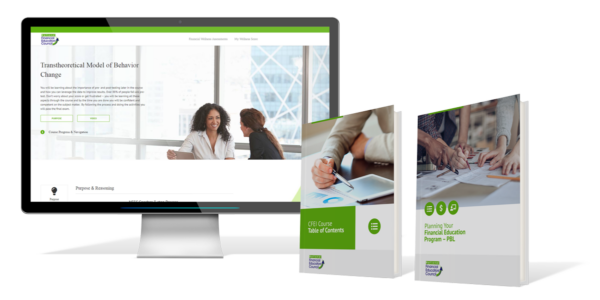
Financial Learning Assessments & Experience Tracking Tools

High quality financial education isn’t just about teaching facts – it’s about helping people make real, lasting improvements in their financial lives. And to show that your program is truly making a difference, you need to measure more than knowledge. You need to understand how learning shifts attitudes, influences behaviors, strengthens systems, and ultimately shapes real world outcomes. That’s where structured financial education assessments come in. They give educators and organizations across ANZ a clear, reliable way to track progress and demonstrate meaningful impact.

But great results don’t happen by accident. A strong learner experience is just as important as strong content. Effective programs require thoughtful preparation, confident facilitation, and follow up that reinforces learning long after the session ends. The NFEC supports educators throughout the ANZ region with a full suite of customizable program delivery tools – from prep checklists and facilitation guides to outcome measurement systems and reinforcement materials – so you can deliver consistent, high quality financial education every time.

Financial Literacy Tests & Assessments

At the end of the day, the goal of any financial education program is simple: create measurable, real world change that sticks. To make that happen, you need to track learner progress from multiple angles. That means looking not only at what participants know, but also how they feel, how they behave, and how they apply what they’ve learned in their daily lives.

The NFEC’s comprehensive assessment bank and reporting toolkit help you demonstrate true program impact – not just short term recall. These tools are customizable, competency mapped, and audit ready, giving you everything you need to show stakeholders how your instruction is improving real financial outcomes.

You’ll have access to ten customizable assessments – hundreds of questions in total – designed to capture learner sentiment, behaviors, systems, and long term results. In other words, you get the data you need to prove impact, not just participation.

These assessment banks include targeted measures across key areas such as:

Behaviors

Observable actions that support their journey to becoming effective stewards of their finances.

Systems

The routines, tools, or structures they’ve developed to support their personal finance management.

Stage of Change

Their readiness and willingness to apply what they’ve learned.

Sentiment

Their feelings, confidence, and mindset toward applying what they learned in the lessons.

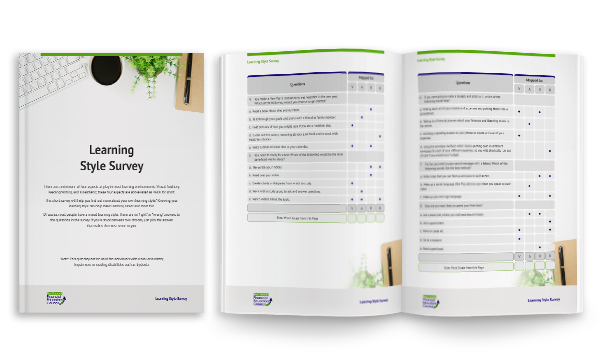
Learning Style Survey

Measure how learners prefer to receive, process, and engage with information.

Interest

Their level of engagement and motivation to learn the subject matter.

Content Knowledge

What learners understand about teaching personal finance topics. (Available with curriculum only.)

Support

The networks, resources, or people they access to help them succeed.

Actions

Specific steps learners take as a direct result of the training.

Outcomes

Real-world impact and measurable results stemming from their learning experience.

Case Study Report Template

A professional tool to document your program’s success and showcase outcomes to funders, employers, and community partners.

Certification Tour, Graduate Features, & Bonus Presentation Resources

  • CFEI® Tour: See how the program works and explore the journey step by step.

  • Graduate Features: Hear real stories from instructors making an impact.

  • Bonus Resources: Get exclusive teaching tools to elevate your financial education programs.

This is more than a course – it’s your opportunity to join a global network of educators committed to empowering individuals and communities with practical, life-changing financial skills.

By accessing the NFEC’s material, you agree to comply with the full terms.

Join Over 5,000 Enrolled CFEI® Champions Providing Others Qualified Financial Education

User Experience Toolkit

Delivering a truly high quality financial education program takes more than strong content. It calls for thoughtful preparation, confident facilitation, and consistent follow up that helps learners turn new knowledge into lasting habits. To support you in creating that kind of world class experience, we’ve built a complete suite of resources that walk you through every stage – from pre program planning to delivery to long term reinforcement.

These tools are designed to streamline your prep time, ensure a consistent standard of excellence across facilitators and locations, and make sure every session reflects clear learning goals and professional execution. And because every organization is different, everything can be tailored to your brand and context – from registration workflows and facilitator checklists to outcome measurement systems and ongoing learning materials.

With this comprehensive package in place, you’re free to focus on what matters most: crafting meaningful learning experiences that help participants build confidence, change behaviors, and move toward lasting financial well being.
Pre-programming

Preparation checklists, pre-participant surveys, registration workflows, and email templates to build anticipation and set the tone.

Implementation

Preparation checklists, pre-participant surveys, registration workflows, and email templates to build anticipation and set the tone.

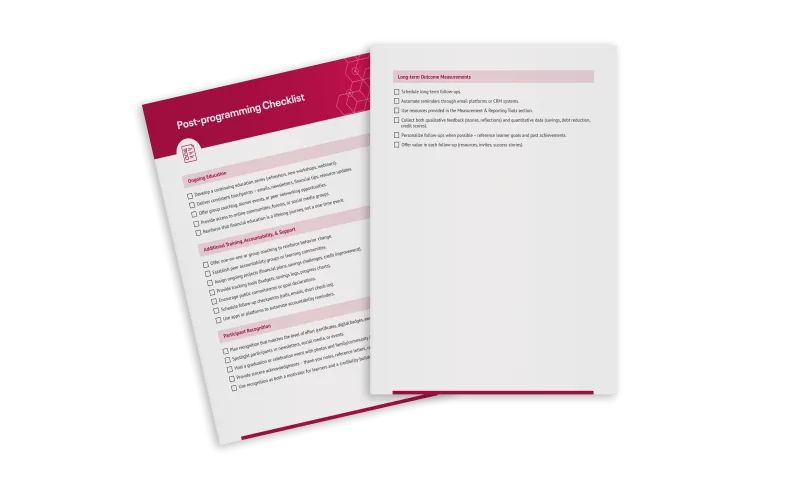
Post-programming

Recognition templates, outcome measurement systems, and ongoing education materials to reinforce learning and strengthen long-term outcomes.

Certification Tour, Graduate Features, & Bonus Presentation Resources

  • CFEI® Tour: See how the program works and explore the journey step by step.

  • Graduate Features: Hear real stories from instructors making an impact.

  • Bonus Resources: Get exclusive teaching tools to elevate your financial education programs.

This is more than a course – it’s your opportunity to join a global network of educators committed to empowering individuals and communities with practical, life-changing financial skills.

By accessing the NFEC’s material, you agree to comply with the full terms.

Join Over 5,000 Enrolled CFEI® Champions Providing Others Qualified Financial Education

Australia

OECD/INFE International Survey of Adult Financial Literacy, 2020 / 2023

Lead organisation: Organisation for Economic Co-operation and Development (OECD) / International Network on Financial Education (INFE)

Key results:

  • Measures adult financial literacy across financial knowledge, behaviour, and attitudes using a globally standardised methodology.
  • Australia scored among higher-performing OECD jurisdictions, with strong performance in budgeting and product awareness but continued gaps in retirement planning and financial resilience.
  • Survey includes indicators on financial inclusion, financial wellbeing, and digital financial literacy.

Australia

ANZ Adult Financial Literacy Survey, 2015

Lead organisation: ANZ (commissioned national research)

Key results:

  • Found that financial literacy improved modestly since 2011, particularly in budgeting and savings behaviours.
  • Many Australians still struggled with complex financial products, insurance, and long-term planning.
  • Measured financial knowledge, attitudes, behaviours, and decision-making confidence across a nationally representative sample.

Australia

ANZ Financial Wellbeing Survey, 2021

Lead organisation: ANZ

Key results:

  • Surveyed more than 5,000 adults across Australia and New Zealand.
  • Average Australian financial wellbeing score: 64/100.
  • Population segments: 29% “no worries,” 43% “doing OK,” 17% “getting by,” and 11% “struggling.”
  • Assessed financial resilience, day-to-day money management, future financial security, and financial confidence.

New Zealand

New Zealand Financial Capability Survey, 2020

Lead organisation: Te Ara Ahunga Ora Retirement Commission

Key results:

  • Surveyed over 3,000 New Zealanders to assess financial capability, financial knowledge, financial wellbeing, and money management behaviours.
  • Found that financial behaviour and psychology often had a stronger influence on wellbeing than income alone.
  • Approximately two-thirds of respondents made poorly informed choices about financial products, and more than 85% lacked sufficient knowledge to compare credit or insurance products effectively.

New Zealand

Financial Capability of Secondary Students Study, 2014 (published 2015)

Lead organisation: New Zealand Council for Educational Research for the Retirement Commission

Key results:

  • Assessed secondary students’ financial capability, attitudes, behaviours, and money management experiences.
  • Found significant variation in student confidence around budgeting, saving, and financial decision-making.
  • Identified barriers to delivering financial education in schools and highlighted the need for stronger curriculum integration.

New Zealand

ANZ Financial Wellbeing Survey, 2021

Lead organisation: ANZ

Key results:

  • Average New Zealand financial wellbeing score: 63/100.
  • Population segments: 25% “no worries,” 47% “doing OK,” 20% “getting by,” and 8% “struggling.”
  • Measured financial capability, resilience to shocks, future planning, and money confidence.

Papua New Guinea

National Financial Capability Survey, 2013–2014

Lead organisation: Bank of Papua New Guinea with the World Bank

Key results:

  • Established a national baseline of financial capability across income groups, urban/rural populations, and regions.
  • Measured money management, financial planning habits, financial decision-making, and use of formal and informal financial services.
  • Designed to support national financial inclusion and financial education policy development.

Papua New Guinea

OECD/INFE International Financial Literacy Survey (participation through regional benchmarking where available)

Key results:

  • PNG has periodically used internationally comparable financial capability frameworks to inform financial inclusion efforts.
  • National policy efforts have focused on basic financial knowledge, savings, budgeting, and access to formal financial services, especially in rural communities.

Regional / Comparative (ANZ-relevant)

Australia & New Zealand

ANZ Financial Wellbeing Surveys (2003–2021 series)

Lead organisation: ANZ

Key results:

  • One of the longest-running financial literacy and wellbeing measurement programmes in the ANZ region.
  • Tracks changes in financial literacy, capability, resilience, and confidence over time.
  • Shows younger adults and families consistently report lower financial wellbeing than retirees.